
I. Introduction
The landscape of contemporary higher education is undergoing a profound transformation, shifting its paradigm from a traditional knowledge-dissemination model toward a holistic student development framework that aims to cultivate well-rounded individuals equipped with integrated moral, intellectual, physical, aesthetic, and labor-related competencies [1]. Central to this transformation is the effectiveness of student education management—a complex systems-engineering process that coordinates academic guidance, psychological counseling, career development, and, crucially, labor education. In March 2020, the Central Committee of the Communist Party of China and the State Council explicitly advocated the comprehensive strengthening of labor education in colleges and universities, emphasizing the need to “incorporate labor literacy into students’ comprehensive quality evaluation systems” and to “strengthen process evaluation” [2]. This policy directive highlights a pivotal challenge facing modern educational administration: the transition from a narrow focus on academic indicators, such as Grade Point Average (GPA), toward a multidimensional, dynamic, and process-oriented assessment of students’ growth and development. However, the inherent complexity of student development, characterized by diverse and continuously evolving needs, multifaceted tasks, and consistently limited administrative resources, renders conventional and static management models increasingly inadequate and inefficient.
The challenges inherent in current student education management practices are multifaceted and deeply interconnected. First, there is a significant evaluation gap. Traditional assessment mechanisms predominantly rely on summative and outcome-based evaluations, which are fundamentally unsuitable for capturing the procedural, experiential, developmental, and often implicit nature of the core competencies cultivated through activities such as labor education and holistic student engagement [3], [4]. Preliminary studies and practical observations have consistently identified several common shortcomings, including an excessive emphasis on final results rather than developmental processes, reliance on a single evaluation subject, typically the instructor, narrowly defined evaluation content, and a conspicuous lack of robust, transparent, and scientifically grounded assessment standards [5]. This gap is particularly evident in the field of labor education, where the cultivation of labor values, positive attitudes, responsible work habits, practical abilities, and an innovative spirit constitutes a long-term, subtle, cumulative, and iterative process that resists straightforward quantification through conventional, one-time assessment measures.
Second, a persistent management efficiency gap continues to affect administrative operations. University management resources—including academic supervisors, psychological counselors, student affairs administrators, and career development advisors—often operate within separate organizational silos and employ static, fragmented, or rudimentary resource allocation models [6]. When confronted with a continuous and diverse influx of student needs—ranging from acute psychological crises requiring an urgent response to long-term strategic activities, such as career planning, that possess high delayed value—conventional scheduling methods, including First-Come-First-Served (FCFS) scheduling and static priority queuing, struggle to achieve optimal resource utilization, timely responsiveness, equitable access, and appropriate task assignment. This situation frequently produces the paradox of administrative resources remaining idle in certain domains while critical overloads occur simultaneously in others. Such imbalances ultimately compromise the overall quality, accessibility, fairness, and inclusiveness of student support services while hindering the balanced, comprehensive, and personalized development of the student population [7], [8].
A critical review of the existing literature reveals several scholarly attempts to address these interconnected challenges. Within the field of educational technology, data mining and advanced analytical techniques have been investigated as methods for personalizing and improving ideological and political education [9]. Similarly, integrated and multidimensional approaches that combine Party building with curriculum development have been proposed to enrich the broader educational ecosystem [10]. From the perspective of operations research and computational intelligence, sophisticated optimization algorithms, such as Ant Colony Optimization (ACO), Particle Swarm Optimization (PSO), and Genetic Algorithms (GA), have been extensively applied to complex scheduling, routing, task assignment, and resource allocation problems across numerous practical fields. Nevertheless, their application within the dynamic, human-centered, and highly nuanced context of educational management remains largely theoretical or restricted to specific and isolated areas, such as course timetabling, examination scheduling, or classroom allocation [11].
These conventional algorithms often exhibit notable limitations when applied to the highly dynamic, multitask, and unpredictable environments that characterize contemporary student affairs management. They may be computationally intensive, require considerable processing time, or converge too slowly toward a satisfactory solution for real-time administrative decision-making. More importantly, conventional implementations may lack the adaptive, self-organizing, distributed, and learning-oriented capabilities required to respond effectively and continuously to fluctuating student needs, changing institutional priorities, unexpected emergencies, and variations in resource availability. Furthermore, a significant limitation of existing frameworks is their tendency to treat operational management efficiency and meaningful educational outcomes as separate or even competing objectives. Consequently, they fail to provide an integrated and systemic solution that dynamically and intelligently connects resource allocation decisions with the overarching educational mission of promoting comprehensive, equitable, and individualized student development [12].
The core research gap addressed by this study, therefore, concerns the absence of a coherent, intelligent, adaptive, and holistic student education management framework. Such a framework must be capable of dynamically coordinating a broad spectrum of multidimensional student tasks with inherently limited administrative resources while simultaneously supporting a scientific, process-oriented, developmental, and formative evaluation mechanism designed explicitly to promote balanced and personalized student growth. To bridge this critical gap, this paper proposes, develops, and validates a novel intelligent student education management system based on a Dynamic Ant Colony Division of Labor (DACLD) model [13], [14].
Inspired by the remarkably efficient, robust, adaptive, and flexible task-allocation behaviors observed in eusocial insect colonies, the DACLD model represents a specialized branch of swarm intelligence algorithms that excels in distributed problem-solving within complex and dynamic systems [15]. Its principal strength arises from the emergence of sophisticated global intelligent behavior through the localized interactions of numerous relatively simple individual agents. This characteristic allows the entire system to adapt effectively and gracefully to complex, changing, uncertain, and unpredictable environments without depending on a single centralized decision-making mechanism. In the proposed computational framework, the diverse range of student needs—categorized as academic support (\(T_1\)), psychological counseling (\(T_2\)), labor and social practice (\(T_3\)), and career development (\(T_4\))—is formally modeled as a set of dynamic “tasks,” each possessing a continuously changing environmental stimulus value (\(S_j\)).
These stimulus values are not static; instead, they fluctuate in real time according to factors such as task urgency, inherent educational value, potential developmental impact, and the critical duration for which a particular task has remained unaddressed. Conversely, the available administrative resources—including academic tutors, psychological counselors, student affairs instructors, labor education coordinators, and career development advisors—are modeled as autonomous “ants,” or intelligent agents, each characterized by an internal response threshold (\(\theta\)) for different categories of tasks. This threshold is dynamically determined through a combination of the agent’s inherent expertise and professional specialization, current workload, historical performance, previous task-completion quality, and individualized resource-consumption factor. The resulting threshold therefore creates a detailed and continually updated profile of each agent’s availability, suitability, capacity, and professional competence.
The proposed DACLD-based management system operates through a continuous, closed-loop cycle consisting of environmental perception through stimuli, internal assessment through adaptive thresholds, and task execution through probabilistic responses. When a specific student need emerges, persists, or becomes more urgent, its corresponding environmental stimulus value increases accordingly. Autonomous agents then probabilistically determine whether to engage with the available tasks according to the dynamic interaction between the prevailing stimulus intensity of each task and their own current response thresholds [16], [17]. This distributed decision-making process allows urgent and educationally valuable tasks to attract suitable administrative resources while preventing individual agents from becoming persistently overloaded.
A key algorithmic innovation of the proposed DACLD model is the direct incorporation of predictive elements, including task-state forecasting and individualized resource-consumption metrics, into the calculation of the response threshold. This forward-looking capability enables the system to manage workloads proactively, anticipate potential administrative bottlenecks, reduce excessive waiting times, and prioritize tasks intelligently in accordance with strategic educational objectives. Furthermore, a sophisticated conflict-resolution mechanism is incorporated into the model to ensure that situations in which multiple agents compete for a single high-priority task, or, conversely, in which a highly specialized agent receives multiple competing requests, are resolved optimally and fairly. This mechanism assigns tasks according to a comprehensive suitability metric that considers expertise, availability, urgency, workload, historical performance, and anticipated resource consumption. It thereby maximizes overall system efficiency, promotes equitable resource distribution, improves the quality of task allocation, and maintains operational robustness under varying workload conditions.
II. The Dynamic Ant Colony Division of Labor Model
A. Customized Model Description
Within the dynamic and complex underwater environment, each task in the task set \(Task=\{Task_{1},Task_{2},\ldots,Task_{M}\}\) corresponds to an environmental stimulus value \(s_{j}\), where \(j=1,2,\ldots,M\). Collectively, these values constitute the set \(s=(s_{1},s_{2},\ldots,s_{M})\). The magnitude of each stimulus depends on the value of the corresponding task and on whether an \(AUV\) is available to execute it; consequently, the stimulus changes continuously over time. At the initial moment, the magnitude of the task’s environmental stimulus value \(s_{j}(0)\) depends exclusively on the type and value of the task to be performed, that is,
where \(V(Task_{j} )\) represents the value of \(Task_{j} \).
The magnitude of the task’s environmental stimulus value reflects its urgency. A larger stimulus value indicates a more urgent task and a greater likelihood of attracting ants (\(AUV\)s) to execute that task. Each ant determines whether to perform a task by jointly considering the task’s environmental stimulus value and its own response threshold for that task. If the task is not performed, its environmental stimulus value changes over time according to the following update rule:
where \(\delta_{j}\) represents the increment in the environmental stimulus value of \(Task_{j}\) per unit of time, while \(\eta\) represents the degree of task completion, which is calculated as follows:
where \(TASK\_Resource(j)\) represents the total quantity of resources required to complete \(Task_{j}\) in its initial state, and \(RT_{j}(t+1)\) represents the resources that \(Task_{j}\) still requires after an \(AUV\) executes it. Each time an \(AUV\) executes \(Task_{j}\), the resources that remain necessary for task completion are updated according to the following rule:
In this expression, \(R\_AUVCost(t)\) represents the resources consumed by the \(AUV\) while performing the task at time \(t\). When the \(AUV\) chooses to perform a particular task, meaning that its state transitions from \(s_{state_{\alpha}}\) to \(s_{state_{\beta}}\), the corresponding relative environmental stimulus value must be calculated as follows:
When \(AUV_{i}\) is idle, a corresponding “virtual task” \(Task_{0}\) is assumed to exist within the environment. The state of this virtual task is not updated, and its environmental stimulus value satisfies the following expression:
As task conditions change and the \(AUV\) completes a particular number of tasks, the quantity of its remaining resources also changes. Accordingly, the response threshold changes dynamically and is expressed as follows:
where
\(D_{ij}^{-}\) and \(T_{ij}^{-}\) respectively represent the normalized dimensionless distance and the normalized predicted arrival time. The parameters \(\omega_{1}\) and \(\omega_{2}\) represent their corresponding weights. Moreover, \(n\) represents the number of remaining resource categories with nonzero values, while \(m\) represents the number of tasks with nonzero resource requirements. The parameter \(\phi_{i}\) represents the learning factor and reflects the learning ability of \(AUV_{i}\). Its range satisfies \(\phi_{i}<1\), and it is calculated as follows:
where \(N_{k}(t-1)\) denotes the number of times agent \(i\) has performed the task before time \(t\), and \(stu\in(0,1)\) is the initial learning factor. The parameter \(\phi_{i}(t)\) represents the resource-consumption factor of \(AUV_{i}\) at time \(t\). The magnitude of \(\phi_{i}(t)\) is related to the resources \(RC_{i}(0)\) initially carried by \(AUV_{i}\) and the resources \(RC_{i}(t)\) that remain available to it at time \(t\). The factor is calculated using the following expression:
When the state of \(AUV_{i}\) transitions from \(state_{\alpha}\) at time \(t\) to \(state_{\beta}\) at time \(t+1\), the relative response threshold \(\overline{\xi}_{i}\) must be calculated as follows:
The response threshold of \(AUV_{i}\) for the virtual task \(Task_{0}\) is expressed as follows:
The transition probability refers to the probability that \(AUV_{i}\) will move from its current state to another available state. After the transition probabilities have been compared, the state with the highest probability is selected and designated as the next state. The term \(p_{ij}\) represents the probability that \(AUV_{i}\) will transition to the execution of task \(j\) at the next moment:
where \(j\) represents the number of the task executed by \(AUV_{i}\) at the current moment.
B. Conflict Resolution for Cyclic Contention
In general, each \(AUV\) selects the task with the highest transition probability as the next task to be performed.
When multiple \(AUV\)s select the same task, assumed to be the \(e\)-th task, at the same time, a task conflict occurs. The conflict-resolution process must address the following important problems:
- How should one or more \(AUV\)s be selected from among the conflicting \(AUV\)s to perform the \(e\)-th task, and which evaluation criteria should govern this selection?
- Is it possible that the \(AUV\) that loses the competition for the \(e\)-th task is more suitable for the \(f\)-th task than the \(AUV\) that initially wins the competition for that remaining task? If the answer is “yes,” the \(AUV\) that loses the competition for the \(e\)-th task and the \(AUV\) that wins the competition for the \(f\)-th task enter into another competitive relationship. The \(AUV\)s that are unsuccessful in the second competition for the \(f\)-th task then compete for a third time according to \(p_{ij}\) and \(\xi_{ij}\), and this process continues iteratively, thereby forming cyclic competition.
- At what point should cyclic competition stop, and on what basis should that stopping decision be made? Most previous conflict-resolution methods permit only one competition, after which eliminated agents no longer participate in the current task-assignment process and remain idle. Such an allocation scheme may waste valuable \(AUV\) resources and result in relatively low task-execution efficiency. Therefore, the following conflict-resolution solutions are proposed to address the problems described above:
When multiple \(AUV\)s select a particular task according to their transition probabilities, an \(AUV\) whose available resources satisfy the task’s resource requirements is preferentially selected, rather than immediately adopting a cooperative execution scheme. In addition, because the \(AUV\) response threshold \(\xi_{ij}\) combines the distance between the \(AUV\) and the task, the time required for the \(AUV\) to execute that task, the \(AUV\) resource-consumption factor, the remaining-resource occupancy rate of the \(AUV\), and the \(AUV\)’s ability to execute the task, \(\xi_{ij}\) is employed as the principal conflict-resolution indicator. A smaller value of \(\xi_{ij}\) indicates that the \(AUV\) is more suitable for performing the task. Therefore, in principle, the system assigns an \(AUV\) with a smaller \(\xi_{ij}\) value to each task whenever possible.
When the number of tasks remaining during the task-execution process is smaller than the number of active \(AUV\)s, some \(AUV\)s may lose the competition for every available task. At that point, each unsuccessful \(AUV\) is assigned to a virtual task.
When all \(AUV\)s have been assigned tasks, including virtual tasks where necessary, the current assignment process and the corresponding cyclic competition procedure terminate. This approach not only ensures the rational utilization of \(AUV\) resources but also improves the efficiency with which the entire \(AUV\) group executes its assigned tasks.
III. Evaluation Model of Labor Education Curriculum
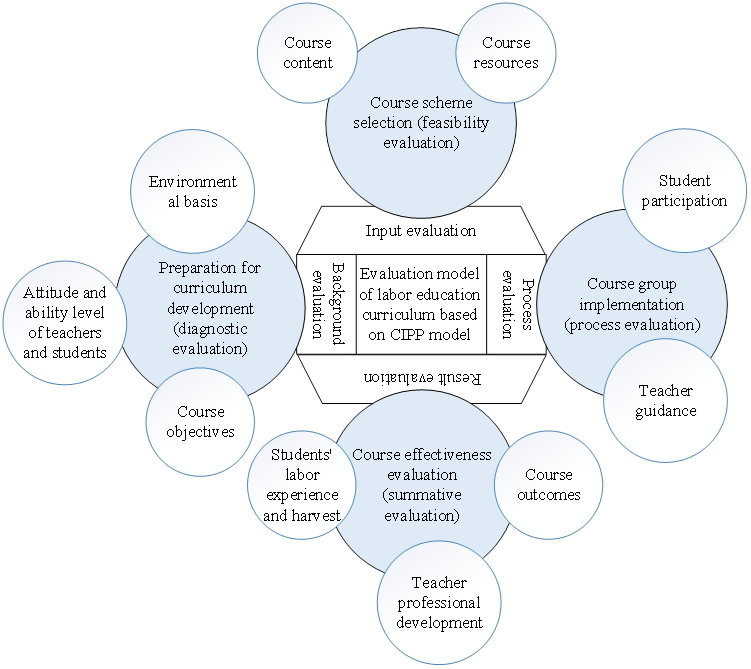
Based on the evaluation framework established through the Dynamic Ant Colony Division of Labor model, this study constructs a corresponding four-in-one labor education curriculum evaluation model comprising “course development preparation, course plan selection, course-group implementation, and course-effect evaluation” [18]. The complete structure of this integrated curriculum evaluation model is presented in Figure 1.
The relationships among the model’s elements can be explained as follows. First, curriculum development preparation is grounded in background evaluation, through which diagnostic assessments are conducted regarding the environmental foundation, teachers’ attitudes and ability levels, and the objectives of the labor education curriculum. Second, curriculum plan selection is based on input evaluation, through which the scientific validity, rationality, and feasibility of the labor education curriculum content and curriculum resources are assessed. Third, course-group implementation, which is based on process evaluation, constitutes the core stage and includes formative assessments of student participation and teacher guidance during the implementation of labor education courses. Finally, course-effect evaluation, which is based on outcome evaluation, represents the key concluding stage and provides a final assessment of students’ labor experiences and learning gains, teachers’ professional development, and curriculum achievements following course implementation [19]. The evaluations corresponding to these stages are harmonious, unified, mutually connected, and relatively independent. “Interconnection” means that the process and outcome evaluations of labor education courses are conducted on the premise that the background is appropriate and the input is feasible. The process and outcome evaluations generated after curriculum implementation subsequently provide feedback and safeguards for the initial background and input evaluations. “Relative independence” means that evaluations at multiple stages may be conducted simultaneously within a continuous cycle, while a targeted evaluation may also be performed for one specific stage when necessary [20].
Together, these interconnected components provide a structured basis for evaluating curriculum preparation, implementation quality, educational outcomes, and subsequent evidence-based improvement across successive evaluation cycles.
A. Background Evaluation Indicators of Students’ Labor Education Courses
Within the Dynamic Ant Colony Division of Labor model, background evaluation is the process of analyzing and diagnosing the clarity and suitability of course objectives, the adequacy with which students’ needs are understood, and the supportiveness and compliance of the implementation foundation underlying the curriculum plan. Background evaluation generally uses systematic analysis, surveys, literature reviews, Delphi techniques, and other appropriate methods in a flexible manner to conduct a diagnostic assessment of the “needs, problems, resources, and opportunities” associated with the evaluation object in a particular environment. Its evaluation content primarily includes “clarifying the needs of the evaluation object, assessing the necessity and importance of those needs, identifying opportunities to meet the needs, diagnosing the fundamental problems underlying the needs, and determining whether the established objectives adequately reflect those needs” [21].
First, the environmental foundation for labor education curriculum development should account for external support from the state and society, as well as the compliance and suitability of the school’s internal environment. Second, teachers and students are the principal participants in the labor education curriculum. Only by fully understanding students’ needs and expectations and examining teachers’ recognition of the curriculum’s value, their curricular concepts, and their abilities in curriculum development and teaching can curriculum design acquire both a realistic and broadly supported foundation. Such preparation also makes the curriculum plan more feasible and operational. Finally, curriculum objectives provide not only the basis for selecting and organizing curriculum content but also the foundation for curriculum implementation and outcome evaluation. It is therefore essential to determine in advance whether the course objectives are comprehensive, clear, appropriate, and understood and recognized by both teachers and students. As summarized in Table 1, the background evaluation system for labor education courses comprises three secondary indicators and 13 tertiary indicators.
| First-level indicator | Secondary indicators | Tertiary indicator |
|---|---|---|
| Course development preparation | Environmental Basics | The state and education administrative departments attach importance to labor education, and have clear relevant policies and implementation requirements, guidelines, etc.; |
| The area and community where the school is located can provide sufficient funds and related resource support and labor education practice base, etc.; | ||
| The school can actively create a campus culture that promotes the ideas that students should love labor, that labor is honorable, and that labor creates value; | ||
| The school prioritizes the construction of a labor education curriculum system and has comprehensive labor education programs and implementation plans; | ||
| The school has a fixed working day/week/month and often holds relevant themed activities. | ||
| Teacher attitude and ability level | Students can realize the significance of labor education; | |
| Students have the need to improve their own labor literacy; | ||
| Students can actively participate in labor education related activities; | ||
| Teachers fully understand the meaning and value of labor education; | ||
| Teachers possess appropriate labor education curriculum-development skills, teaching abilities, and practical experience. | ||
| Course targets | The goal is to improve labor values, labor habits, labor knowledge and ability, etc.; | |
| The goal is in line with the actual level of students’ development in the field and the objective laws of students’ physical and mental development; | ||
| The objective statement is accurate, clear, specific, and operationally feasible. |
| First-level indicator | Secondary indicators | Tertiary indicator |
|---|---|---|
| Course plan selection | Course content | It is appropriate to the objectives of labor education; |
| The content is basic, including basic labor knowledge, basic skills learning and labor practice experience, etc.; | ||
| The content is comprehensive, involving daily labor, production labor and service labor; | ||
| It is close to the actual life of students and meets the needs of students’ personality, interests and abilities; | ||
| It is compatible with the school’s purpose, characteristics and educational conditions; | ||
| It reflects contemporary developments and integrates new technologies and information in a timely manner; | ||
| The division of labor education content in different school stages is reasonable; | ||
| It can be effectively integrated across other courses and educational activities. | ||
| Course Resources | The implementation site of labor education inside and outside the school and the hardware facilities of labor education are complete; | |
| The school has a special labor education course teacher team and teacher training mechanism; | ||
| The school has sufficient funding, information, network resources, and community- and family-related resources to implement labor education courses. |
B. Input Evaluation Indicators of Student Labor Education Courses
The purpose of input evaluation within the Dynamic Ant Colony Division of Labor evaluation model is “to evaluate the conditions, content, resources, and other elements required to achieve the objective on the basis of background evaluation; its essential function is to assess the feasibility of different alternative educational programs.” This evaluation is intended to help decision-makers select the most appropriate means of accomplishing the established objective. Its content includes “the rationality of and reasons for selecting the program, the requirements concerning the utilization of different personnel and external resources, and the anticipated degree of program success” [22].
From the perspective described above, this study primarily examines the labor education curriculum plan in terms of its curriculum content and the resources required for implementation. The selection and organization of course content influence how schools and teachers understand the nature of the course, how teachers design particular course types, how educational activities are organized during curriculum implementation, and which aspects receive emphasis in student evaluation. These decisions ultimately affect the overall implementation of the curriculum and the achievement of its objectives. Labor education curriculum content encompasses a wide range of dimensions, multiple levels, and diverse presentation methods. Therefore, the evaluation of labor education curriculum content should fully consider whether the content is aligned with the objectives, students’ actual lives and developmental needs, the school’s educational philosophy, and the available educational conditions. It should also determine whether the content is appropriate, scientifically grounded, comprehensive, and practical [23]. “Course resources refer to all materials and conditions that can be used for courses and teaching activities and that satisfy their requirements,” including “conditional curriculum resources such as human, material, financial, temporal, spatial, media, equipment, facility, and environmental resources.” The richness of these curriculum resources and the extent of their development and application have a decisive influence on the scope and quality of curriculum implementation. Accordingly, the resources available for labor education courses can be evaluated through interviews, questionnaires, and other suitable methods. These methods may examine the development of labor-practice sites, the use of equipment required for labor activities, teacher training and teachers’ labor education capabilities, funding, materials, related implementation methods, resource guarantees, and other aspects associated with each platform. As presented in Table 2, the input evaluation indicators for labor education courses comprise two secondary indicators and 11 tertiary indicators.
IV. Experiments
To comprehensively validate the effectiveness and comparative superiority of the intelligent student education management system based on the DACLD model, we designed and conducted a series of simulation experiments. These experiments simulated the operation of a college serving 1,000 virtual students with limited management resources over the course of one complete academic semester.
A. Experimental Design and Parameter Settings
This experiment constructed a simulation system using Python 3.8 and PyTorch. Using anonymized historical data obtained from a university, the system generated 1,000 virtual student profiles with multidimensional attribute vectors, including major, GPA, social activity level, psychological resilience index, labor skill value, and career-interest coding, through Generative Adversarial Networks (GANs). The system simulated four types of dynamic “growth tasks” generated over one semester of 18 weeks: academic tasks associated with coursework (\(T1\), e.g., “Advanced Mathematics Tutoring”); high-urgency and privacy-sensitive psychological tasks (\(T2\), e.g., “Emotional Management Counseling”); cyclical and group-based labor or social-practice tasks (\(T3\), e.g., “Campus Greening Maintenance”); and long-cycle career-development tasks with delayed value (\(T4\), e.g., “Mock Interviews”). The experiment configured a realistic and resource-constrained management pool comprising 10 academic mentors (\(A1\), primarily responsible for \(T1\)), five psychological counselors (\(A2\), primarily responsible for \(T2\)), 15 counselors with balanced capabilities but the highest efficiency for \(T3\) (\(A3\)), and five career-development mentors (\(A4\), primarily responsible for \(T4\)). To validate the effectiveness of the DACLD model, this study compared it with three benchmark algorithms: Random Assignment, First-Come-First-Served (FCFS), and Static-Priority, with the priority order \(T2>T1>T4>T3\).
B. Evaluation Indicators
To comprehensively evaluate algorithmic performance, this study employed multidimensional metrics. System-efficiency indicators included the task completion rate, average processing cycle, and system throughput, measured as the weekly volume of processed tasks. Resource-utilization indicators included average resource utilization and resource load balancing, represented by the variance in utilization rates. Service-quality indicators included simulated student satisfaction scores and the high-urgency task response rate, defined as the proportion of urgent tasks processed within 24 hours.
C. Experimental Results and Analysis
As shown in Table 3, the comparison of overall system performance demonstrates that the DACLD model proposed in this study provides substantial advantages across all core efficiency metrics. Specifically, the DACLD model achieves the highest task completion rate, at 95.2%, considerably surpassing the other comparison algorithms and indicating its ability to address diverse issues encountered in student development more effectively. Regarding response speed, DACLD reduces the average task-processing cycle to 3.1 days. Its high throughput of 265.6 tasks per week further demonstrates the system’s capacity to manage concurrent tasks efficiently. These strong efficiency indicators directly translate into higher educational service quality, as ultimately reflected by a simulated student satisfaction score of 92.1, the highest score among all evaluated algorithms. By contrast, although the Static-Priority algorithm ensures that high-priority tasks are processed, it sacrifices overall system efficiency. The First-Come-First-Served (FCFS) algorithm performs moderately because it lacks sufficient flexibility, while the Random Assignment algorithm performs substantially worse across all indicators. This comparison highlights the necessity of intelligent task allocation in complex educational management environments. Collectively, the results validate that the DACLD model can comprehensively improve the effectiveness of student education management systems through its dynamic, self-organizing, and adaptive capabilities.
| Algorithm | Task Completion Rate |
Average Processing Cycle (Days) |
System Throughput (Tasks/Week) |
Student Satisfaction Simulation |
|---|---|---|---|---|
| DACLD (Ours) | 95.2% | 3.1 | 265.6 | 92.1 |
| Static-Priority | 89.5% | 5.8 | 248.6 | 85.3 |
| FCFS | 85.3% | 7.2 | 237.2 | 80.5 |
| Random | 78.6% | 9.5 | 218.3 | 72.8 |
The data presented in Table 4 clearly reveal fundamental differences among the task-allocation strategies adopted by the various algorithms and demonstrate their practical effects on the promotion of students’ comprehensive development. The DACLD model demonstrates outstanding overall coordination capabilities, maintaining high and balanced completion rates across all four task categories: academic tasks (\(T1\), 96.5%), psychological tasks (\(T2\), 98.8%), labor tasks (\(T3\), 91.0%), and career-development tasks (\(T4\), 90.5%). These findings indicate that DACLD’s dynamic threshold mechanism sensitively detects changes in task demand and prevents any single task type from monopolizing system resources for prolonged periods. Consequently, it effectively protects students’ opportunities for multifaceted development in morality, intelligence, physical fitness, aesthetics, and labor, thereby serving as a technological foundation for implementing the “five-fold education” philosophy. By contrast, although the Static-Priority algorithm ensures an almost immediate response to the most urgent psychological tasks (\(T2\), 99.2%) through fixed priorities, its strategy exhibits significant structural weaknesses. This approach substantially disadvantages lower-priority tasks, causing the completion rates for labor tasks (\(T3\)) and career-development tasks (\(T4\)) to decline to 75.3% and 81.4%, respectively. Such a “robbing Peter to pay Paul” strategy may create structural imbalances in student development. For example, it may protect students’ mental health while seriously neglecting labor literacy and career-planning skills, thereby undermining the broader objective of holistic education. Meanwhile, the FCFS and Random Assignment algorithms demonstrate insufficient global coordination capabilities. FCFS treats all tasks equally and fails to prioritize high-urgency psychological tasks, which achieve a completion rate of 92.5%, through a rapid-response mechanism; consequently, it produces unremarkable completion rates across every category. Random Assignment performs worst, particularly for psychological tasks (80.1%) and career-development tasks (72.5%), both of which require specialized interventions. This pattern mirrors real-world management challenges characterized by inadequate planning and the inefficient allocation of limited resources.
| Algorithm | Academic Tasks (T1) |
Psychological Tasks (T2) |
Labor Tasks (T3) |
Professional Tasks (T4) |
|---|---|---|---|---|
| DACLD (Ours) | 96.5 | 98.8 | 91.0 | 90.5 |
| Static-Priority | 95.1 | 99.2 | 75.3 | 81.4 |
| FCFS | 88.9 | 92.5 | 76.8 | 78.1 |
| Random | 82.3 | 80.1 | 75.0 | 72.5 |
The data presented in Table 5 demonstrate the exceptional resource-management performance of the DACLD model. This model achieves the highest average resource utilization rate (88.5%) and the best load balance, with a variance of 0.021, indicating its ability to fully mobilize available management resources while avoiding localized overload. For responses to high-priority tasks, DACLD achieves an excellent rate of 96.5%, which is only slightly lower than the 98.1% achieved by the Static-Priority algorithm. However, the latter result is obtained at the cost of a severe resource imbalance, represented by a variance of 0.105. In comparison, DACLD produces a substantial improvement in overall system equilibrium while requiring only a marginal trade-off in urgent-response performance, thereby demonstrating superior comprehensive management capability. The FCFS and Random Assignment algorithms perform poorly in terms of both urgent-task responsiveness and resource utilization, further emphasizing the necessity of an intelligent allocation mechanism.
Table 6 clearly demonstrates the exceptional systemic resilience of the DACLD model under different workload conditions. Under low-load conditions, all algorithms perform similarly and maintain relatively high completion rates. However, when task volume increases to the normal load of 5,000 tasks, the advantage of DACLD becomes clearly apparent, as it leads the other algorithms with a completion rate of 95.2%. During extreme stress testing under the high load of 7,500 tasks, DACLD demonstrates the most robust performance by maintaining an 88.9% completion rate and experiencing substantially less performance degradation than the comparison algorithms. These findings demonstrate that its dynamic task-allocation mechanism can effectively accommodate workload fluctuations and maintain comparatively optimal system performance even under severe resource constraints. The results therefore provide clear evidence of the model’s strong scalability, operational stability, and robustness.
| Algorithm Resource |
Average Resource Utilization |
Resource Load Balance (Variance) |
High-Urgency Task Response Rate (within 24h) |
|---|---|---|---|
| DACLD (Ours) | 88.5% | 0.021 | 96.5% |
| Static-Priority | 82.1% | 0.105 | 98.1% |
| FCFS | 79.4% | 0.088 | 85.7% |
| Random | 75.8% | 0.091 | 70.2% |
| Algorithm | Low Load (2500 tasks) |
Normal Load (5000 tasks) |
High Load (7500 tasks) |
|---|---|---|---|
| DACLD (Ours) | 98.8 | 95.2 | 88.9 |
| Static-Priority | 97.5 | 89.5 | 79.1 |
| FCFS | 96.1 | 85.3 | 72.5 |
| Random | 90.2 | 78.6 | 65.3 |
The labor education curriculum is characterized by openness and generativity and therefore emphasizes students’ embodied experiences. The evaluation of students’ experiences and achievements should focus not only on the tangible labor outcomes produced at the end of an activity but, more importantly, on the developmental status and level of students’ labor literacy throughout the labor process. The assessment of students’ labor literacy encompasses labor knowledge and abilities, labor habits and personal qualities, concepts of labor value, creativity in labor, and other related dimensions. Second, the development and implementation of labor education courses also constitute important factors in promoting teachers’ professional development. Accordingly, evaluating the effectiveness of labor education courses must include careful attention to teachers’ development. The assessment of teachers’ professional development mainly focuses on the formation of appropriate teaching concepts, the expansion and deepening of professional knowledge, and the improvement of professional abilities [24]. Finally, curriculum achievement can be assessed across three dimensions: responses to curriculum implementation, the promotion of achievements, and the evaluation of the curriculum itself. The process-evaluation system for labor education courses includes three secondary indicators and 15 tertiary indicators. By comparing the results with those generated by task-allocation methods based on ACO, PSO, and GA, this study analyzes the self-organization, robustness, and rapidity of the proposed DACLD-based task-allocation method. The population size for ACO, PSO, and GA was set to 30, and 100 iterations were conducted for each task-assignment result. The two weights were set to 0.7 and 0.3, respectively. The resulting simulation outcomes are presented and compared in Figures 2–5.
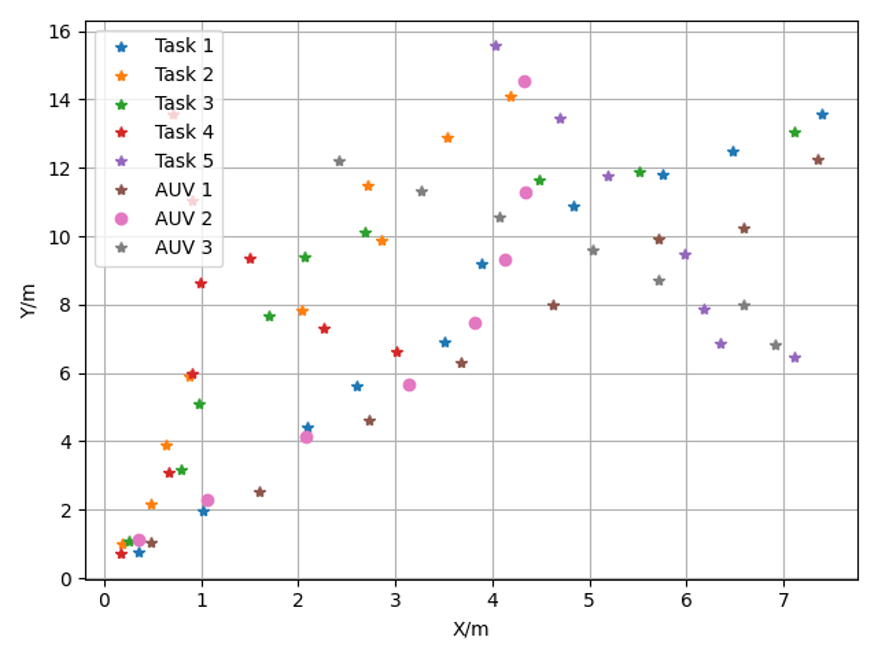
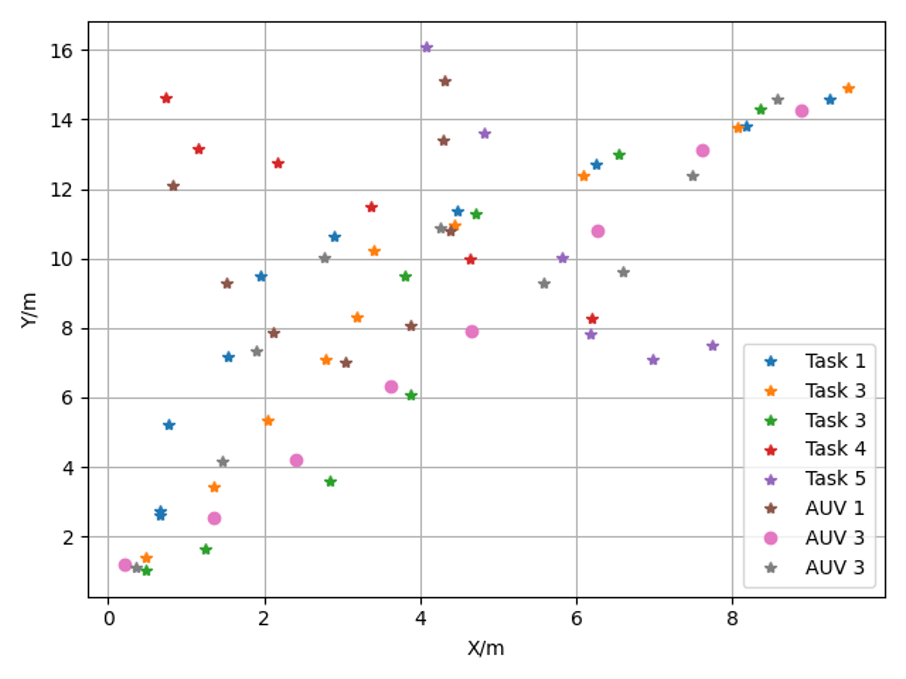
The comparison of the DACLD results in Figure 2 with the ACO, PSO, and GA results in Figures 3, 4, and 5, respectively, supports the following observations:
- The task-assignment results produced by ACO, PSO, and GA show that the agents fail to exchange tasks promptly, resulting in comparatively low execution efficiency. The proposed DACLD-based task-assignment method can adapt its assignments to dynamically changing task states and consequently exhibits strong self-organizing capability.
- When the DACLD task-assignment method is employed, the motion trajectories of the agents are smoother, indicating that the proposed conflict-resolution mechanism demonstrates strong operational robustness.
- Compared with ACO, PSO, and GA, the task-assignment results produced by DACLD change less frequently, and the resulting assignments remain more stable throughout the execution process.
- The ACO-, PSO-, and GA-based task-assignment methods require 51 s, 53 s, and 52 s, respectively, to complete all tasks, whereas the DACLD method proposed in this paper requires only 45 s. This comparison indicates that the proposed DACLD task-assignment method achieves higher overall execution efficiency.

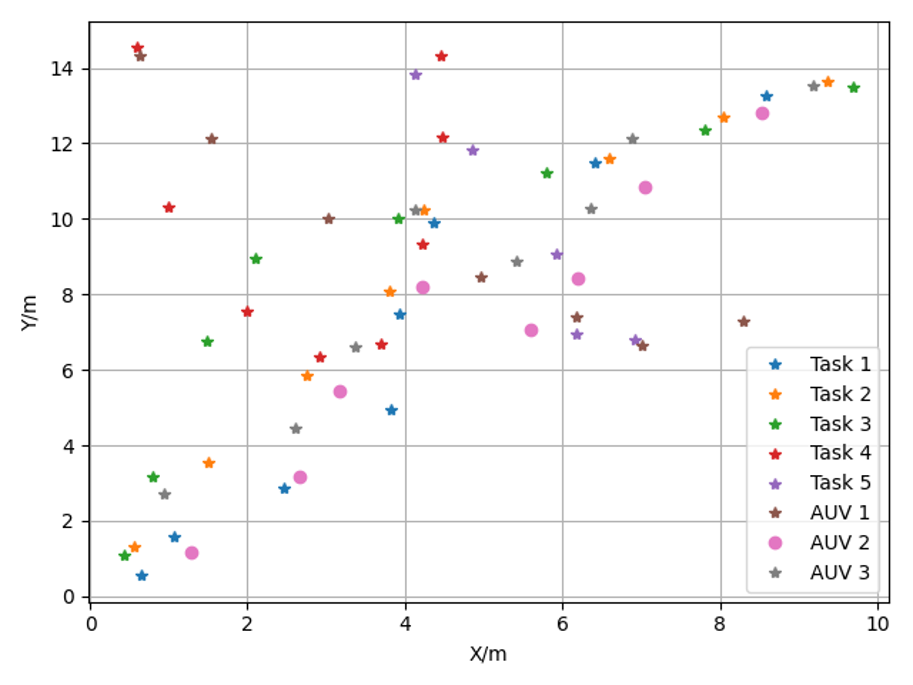
Figure 6 compares the developmental levels of seven core competencies between the experimental group, which used the DACLD management system, and the control group, which followed traditional management practices, at the conclusion of the experimental cycle. As illustrated, the experimental group, represented by the blue bars, achieved significantly higher scores than the control group across all competency dimensions. Particularly pronounced advantages were observed in “Value Identification,” “Planning and Management,” and “Self-Awareness and Sense of Efficacy.” This outcome directly corroborates the findings of the preceding performance assessments. Through its dynamic and precise task-allocation mechanism, as demonstrated by the high levels of efficiency and responsiveness reported in Tables 3–6, the DACLD system not only streamlines management processes but, more importantly, creates a high-quality “learning by doing” environment for students. The system’s intelligent delivery of growth tasks (\(T1\)–\(T4\)), tailored to individual student characteristics and needs, encourages students to proactively plan and manage their own developmental pathways. The successful completion of these tasks continuously strengthens their self-awareness and sense of efficacy. At the same time, the system’s balanced promotion of labor and practical tasks (\(T3\)), as further demonstrated in Table 5, effectively cultivates students’ abilities to mobilize resources, identify opportunities, and take initiative.
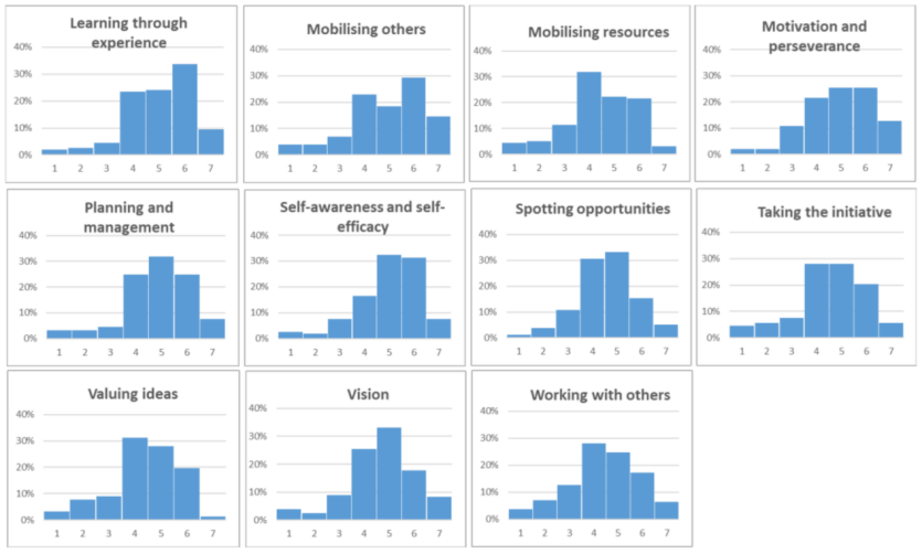

Figure 7 presents a triangular heatmap illustrating the pairwise Pearson correlation coefficients among 23 measurement items associated with three dimensions of metacognitive awareness (MA): Evaluation MA, Everyday/Social MA, and Passive Observation MA. The color gradient extends from blue, representing a negative or low correlation, to red, representing a strong positive correlation, with a numerical scale ranging from \(-0.2\) to \(+1.0\). Notably, stronger within-cluster correlations appear in the diagonal blocks, particularly among the Evaluation MA items (Items 1–9) and Passive Observation MA items (Items 18–23). Several coefficients in these blocks exceed 0.5, including 0.57 and 0.54, thereby indicating relatively high internal consistency. Cross-cluster correlations are generally moderate, ranging from 0.2 to 0.4, while Everyday/Social MA (Items 10–17) forms a bridging region between the two other dimensions. This pattern reinforces the construct validity of the three metacognitive dimensions. Within the context of this study, these dimensions represent students’ differentiated abilities to monitor, reflect on, and interpret media content, which may interact with stress-related factors and exposure to intelligent algorithms. The observed moderate correlations across the MA dimensions may help explain different levels of susceptibility to online behavioral misconduct and provide further support for the multifactor structural equation model proposed in the preceding sections.
V. Conclusion
This study successfully designed and validated an intelligent student education management system based on the Dynamic Ant Colony Division of Labor (DACLD) model. The results conclusively demonstrate that the DACLD framework effectively addresses the limitations of traditional management approaches by introducing dynamic adaptation, comprehensive evaluation, and efficient resource optimization. The proposed system not only achieves significant improvements in operational indicators—including higher task completion rates, shorter response times, better load balancing, and superior resource utilization—but also, more importantly, creates an educational environment that supports the comprehensive and balanced development of students. Evidence obtained from the assessment of core competencies indicates that the DACLD-driven management process actively promotes student development in critical areas such as planning and management, self-efficacy, value identification, resource mobilization, and individual initiative. Although the proposed indicator system provides a foundational methodology and the complexity of the model may present certain implementation challenges, this study clearly establishes the feasibility, effectiveness, and comparative superiority of swarm intelligence for complex educational governance. Future research will focus on refining the evaluation indicators, improving the interpretability and computational efficiency of the model, developing user-friendly software platforms, and conducting real-world pilot studies. These efforts will further translate the proposed theoretical framework into a reliable and widely applicable intelligent management system for higher education institutions.
Funding
This research received no external funding.
Data Availability
The data supporting the findings of this study are available from the author upon reasonable request.
Conflicts of Interest
The author declares no conflicts of interest.
Declaration of Generative AI and AI-Assisted Technologies
Generative artificial intelligence tools were used solely to assist with language editing and the preparation of LaTeX code. The author reviewed and verified the accuracy, integrity, and final wording of the manuscript and accepts full responsibility for its content.