In the field of modern education, the rapid development of information technology has made online teaching an important mode of instruction, particularly within the educational environments of remote areas [1]. However, these changes in the delivery of education have also introduced a series of challenges, including how to establish effective teaching objectives, select appropriate teaching content, and adopt suitable teaching methods within this new mode of instruction. Alongside these pedagogical reforms and the adjustment of teaching strategies and objectives, the study of biomechanics provides new perspectives that help us better understand and optimize students’ physical performance and cognitive abilities throughout the learning process. Biomechanics is applicable not only to the fields of sports science and physical therapy but also to the field of education, where it plays an increasingly important role, particularly in the context of online teaching and learning [2], [3].
Biomechanics examines the mechanics of human movement and addresses the generation, transmission, and changes in forces within the human body during movement. By examining students’ body postures, movement patterns, and muscle strength throughout the learning process, biomechanics can help teachers understand the physical stresses and physiological responses that students may experience during prolonged periods of learning, particularly when participating in online learning activities [4], [5]. The application of biomechanics can help us design teaching environments that better accommodate human needs and optimize students’ body postures and movement patterns, thereby improving both learning efficiency and learner comfort. For example, when students sit in front of a computer for extended periods during online learning, their body postures may be adversely affected, which can influence their concentration, learning efficiency, and even their health. Therefore, teachers can apply their knowledge of biomechanics to recommend ways of improving posture and reducing physical fatigue, helping students maintain good physical condition throughout the learning process [6].
Knowledge of biomechanics provides an equally important point of reference when setting teaching objectives. Biomechanics helps us understand how different movements affect the human body, particularly in relation to fine motor control and the control of force. Online teaching usually requires students to face a screen for extended periods, placing demands not only on their cognitive abilities but also on the fine motor control of their hand muscles and their muscular endurance throughout the learning process [7], [8]. To address these demands, teachers can incorporate biomechanical principles when adjusting teaching objectives, reducing the muscle fatigue that students may experience during prolonged task performance, and establishing learning requirements that are more consistent with students’ physiological functioning. This approach can improve students’ learning while also reducing the physical discomfort associated with poor posture and the excessive use of muscles during learning activities [9].
At the same time, the application of biomechanics can also provide a basis for the selection of appropriate teaching content. When choosing content for online teaching, teachers can consider how well that content matches students’ physical abilities, ensuring that students can complete the tasks required by the course without experiencing undue physical strain [10]. For example, when designing course content involving physical movement, teachers can appropriately organize lesson duration and content difficulty according to students’ physiological condition, allowing students to maintain high levels of motivation and achieve effective learning outcomes throughout the learning process. Research in biomechanics also provides teachers with a basis for identifying the effects of different teaching environments on students’ physical condition and cognitive functioning. Teachers can then use this understanding to adjust their teaching methods and instructional strategies so that they better meet students’ actual learning needs [11], [12].
Regarding teaching methods, biomechanical principles can directly influence how instructors design more interactive approaches to teaching. In online teaching, teachers should focus not only on the transfer of knowledge but also on how students can use their bodies efficiently throughout the learning process, particularly when moving their hands and shoulders [13]. By analyzing and optimizing movement patterns, teachers can encourage students to adopt healthier postures and movements, thereby enhancing their learning experiences and avoiding physical injuries or fatigue resulting from improper posture. In addition, teachers can design interactive activities that engage students’ physical and cognitive potential through virtual simulations of learning situations and other methods that incorporate biomechanical principles. Such activities allow teachers to address physical and cognitive aspects of learning together and thereby promote students’ more holistic development throughout the educational process.
Overall, biomechanics provides an important theoretical foundation and practical guidance for the field of education, together with practical solutions for addressing students’ physical fatigue and cognitive decline during online teaching and learning. With the continued development of information technology, biomechanics will become increasingly widely applied within education and will constitute an important component of the innovation and optimization of teaching approaches. Through these applications, biomechanics can help students complete their learning tasks more efficiently while maintaining their physical health and adapting to the demands of the new learning environment.
The previous study demonstrates that the information platform and its network resources are more effective, professionally oriented, and interactive than the general network resources available to the public. The primary goal is to use these resources as effectively as possible to support teachers’ professional development. The development and improvement of the teacher qualification system, together with the enhancement of instructors’ teaching abilities, are among the principal benefits offered by these resources [14]. In addition to providing a substantial collection of traditional teaching resources in pedagogy, psychology, and educational technology, the online resource platform covers local, national, and international educational concepts, as well as educational and teaching activities with distinctive, varied approaches and useful supporting resources. These resources provide teachers in basic education with comprehensive professional learning materials from multiple fields and perspectives, broadening their horizons, encouraging reflection, and stimulating creativity in their professional practice [15].
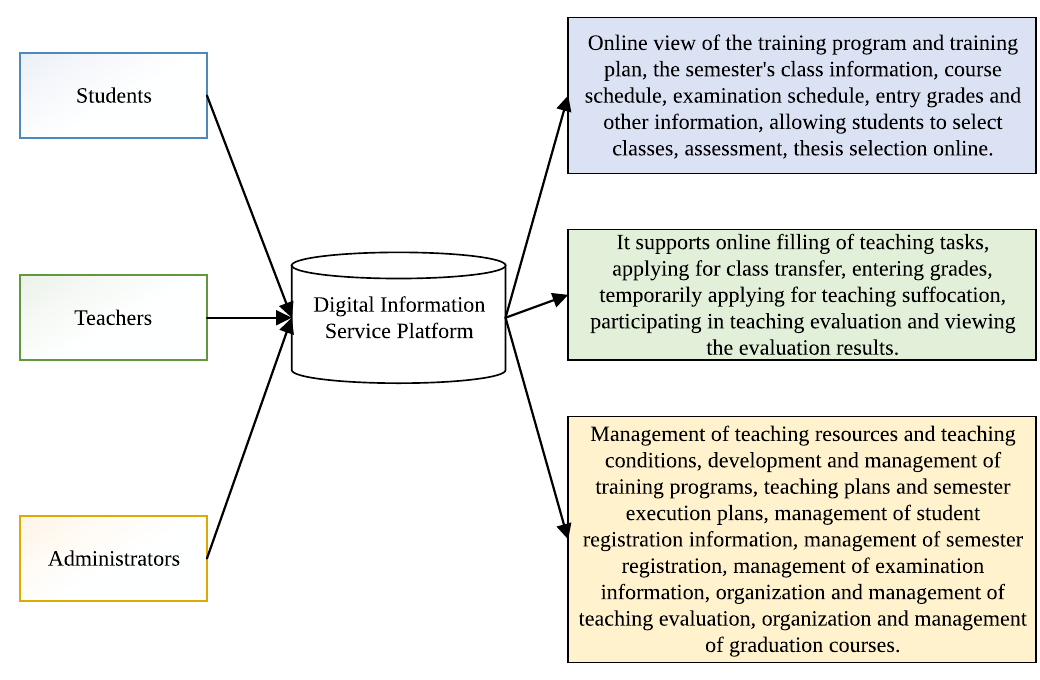
One of the distinguishing features and attractions of university websites is their interactive nature. This interactivity allows teachers to use the network information platforms developed by local universities to download extensive information and upload their own learning experiences and classroom practice materials for other teachers to review and learn from. Through this exchange, teachers can identify their own weaknesses and improve their practice by learning from experts and peers. More importantly, they can transform their own learning achievements into useful resources for other teachers. By receiving advice from peers and professionals, teachers can recognize areas requiring improvement and work toward their own personal and professional development. The collection of resources available through the online information platforms of regional colleges and universities can therefore be continuously expanded, while new and engaging teaching activities can be introduced to these platforms. In this way, teachers can acquire new knowledge, understand the learning process, reflect on their experiences, and achieve further professional growth. The digital information model is shown in Figure 1.
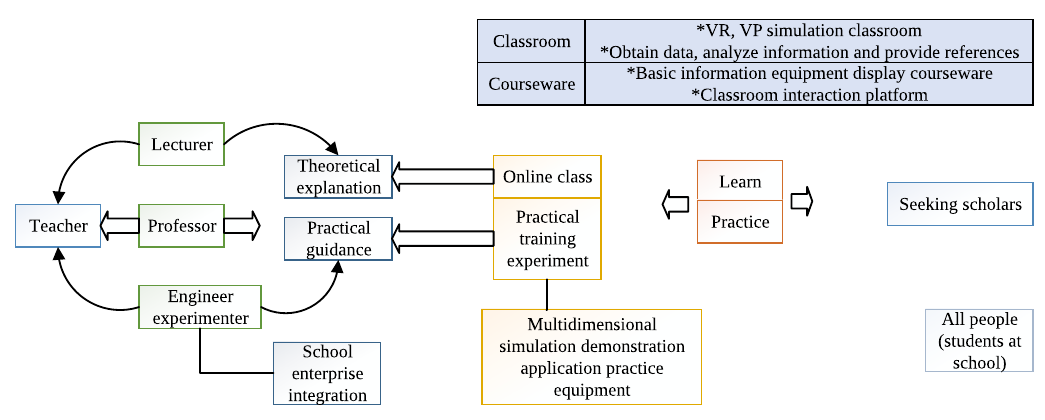
Consequently, it is crucial to develop a shared education platform that institutions can use to provide efficient training for teachers. The division between “learning design” and “practical guidance” illustrated in Figure 2 encourages cooperation between educational institutions and businesses and supports a strong partnership that enhances both teaching content and teaching quality. This arrangement allows students not only to develop a sound theoretical foundation but also to gain exposure to modern, advanced production technologies under the supervision of business personnel. Through the guidance provided by enterprise staff, students can strengthen their understanding of theoretical principles while also becoming familiar with the most advanced production technologies currently used in practice.
In this work, the concept of a data middle platform is combined with the practical requirements of lifelong learning in environments supported by information technology. The data center forms the core of the education informatization platform. It gathers and stores fundamental student data, including learning behavior data, learning statistics, and learning trajectories, together with teaching resource files and platform logs. These materials serve as the data sources used to construct a data lake [16]. OLAP, data mining, and artificial intelligence are used to process the data and extract information from the data lake, aggregate the data into themes, and finally encapsulate these thematic datasets to establish a data service system. This system provides unified, standardized data support for applications. The applications call the data service interfaces provided by the data center to obtain the data required for their operation and return the operational results to the underlying system. Through data collection, aggregation, development, mining, service provision, and feedback, the overall architecture achieves the goals of obtaining data from each functional module of the information platform, building data assets, and supplying data to the applications.
The construction of this framework is a systems engineering project involving the collection, aggregation, and preprocessing of data to build a data warehouse. It also involves extending the use of big data from the information technology platform through data mining, artificial intelligence, and other technologies. Data support is provided to the platform’s operational and management modules through data service interfaces, while learners receive support throughout the process of using the information technology platform. Together, these components establish the overall framework for collecting, processing, and providing the data required by the platform. Figure 3 presents the overall architectural layout.
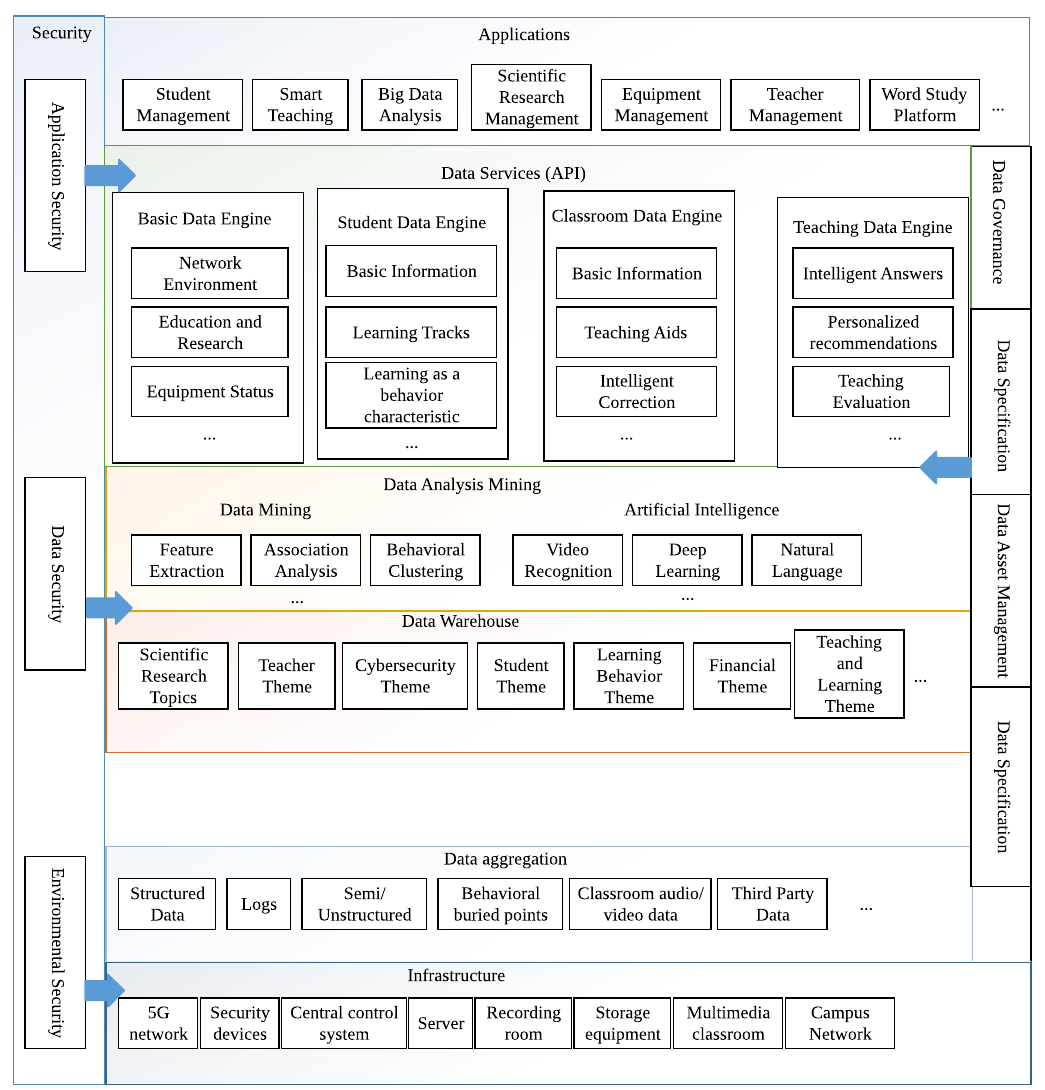
The data middle platform is a data processing mechanism that creates data assets by processing various types of learning-related data while concealing the implementation details of the underlying data and providing industry-standard data service interfaces to external applications. It encompasses processes such as data collection and aggregation, development, computation, mining, and encapsulation. Data asset governance and data security management oversee the entire process, from the initial collection of data to the provision of the data service interface (API), thereby establishing a complete closed-loop system for managing and delivering data services [17].
This function brings together various types of structured, semi-structured, and unstructured data from separate underlying databases and stores them centrally within the data center. In doing so, it creates a data lake that serves as the operational data foundation for the entire data center and its associated data processing activities.
The data development function establishes the foundation for additional application-oriented data services by transforming the data lake created through collection and aggregation into data assets for the education informatization platform. For example, models of student learning behavior and student profiles are created by correlating and analyzing raw data on students’ learning behaviors and grades from functional modules such as the grade management module and learning behavior logs. These models and profiles are then prepared for encapsulation and subsequent use within the data service system, providing the data assets required by the corresponding applications.
In modern educational environments, particularly as online teaching becomes increasingly widespread, teachers face the challenge of optimizing teaching content, objectives, and strategies while also considering students’ physical adaptability and cognitive load throughout the learning process [18]. Biomechanics, as a discipline concerned with the principles of human movement and mechanics, offers new perspectives and solutions for applications in education, especially during online learning activities. This section examines the application of biomechanics in education, focusing specifically on its influence on the establishment of teaching objectives, the selection of appropriate teaching content, and the improvement of teaching methods. These aspects are considered in relation to students’ physical needs during learning.
The application of biomechanics plays an important role in setting educational goals. By understanding students’ physiological and motor responses throughout the learning process, teachers can adjust course objectives to minimize the negative effects of inappropriate body postures or physical loads. Biomechanical principles help teachers understand the fatigue and muscular discomfort that students may experience during prolonged periods of seated learning. This understanding, in turn, supports the optimization of instructional goals and helps teachers avoid excessive reliance on students’ fine motor control when designing learning tasks.
The effect of accumulated muscle fatigue on students’ learning efficiency during prolonged periods of learning is illustrated in Figure 4. Teachers can make timely adjustments to their teaching strategies by observing changes in students’ posture and identifying symptoms of fatigue. For example, when students maintain poor sitting postures for extended periods, teachers can remind them to take breaks and stretch to avoid the negative effects of fatigue on learning effectiveness. Teachers can also adjust both the difficulty and the duration of learning tasks according to the levels of fatigue that students experience.
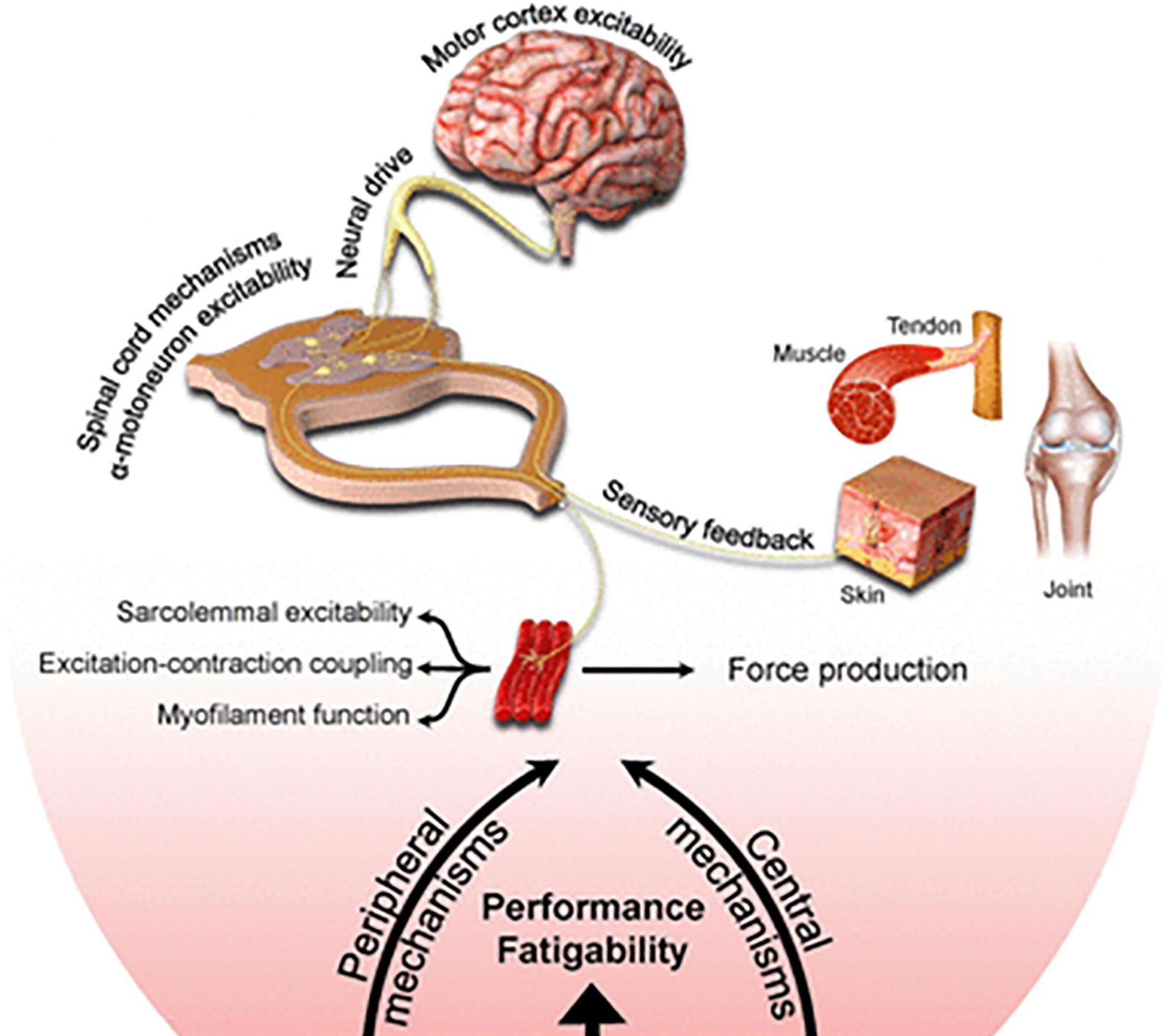
Biomechanical studies have shown that the accumulation of muscle fatigue may reduce motor efficiency when students engage in prolonged periods of study, particularly when they use a mouse and keyboard. The degree of muscle fatigue experienced by the human body during exercise can be described using the following formula, which expresses muscle strength in relation to the duration of activity:
where \(F_t\) is muscle strength at the current moment, \(F_0\) is the initial muscle strength, \(t\) is the duration of exercise, and \(T\) is the maximum duration of muscle endurance. The formula illustrates that muscle strength decreases over time as fatigue increases, thereby affecting students’ learning efficiency and their ability to maintain concentration throughout the learning process.
Research has also shown that maintaining poor posture for prolonged periods can distract students and, in turn, affect their learning outcomes. The effects of posture can be characterized through changes in angles. Assuming that students maintain a constant posture during extended periods of learning, these effects can be examined using the following torque formula from biomechanics:
where \(M\) is the torque, \(F\) is the applied force, and \(d\) is the length of the moment arm. The presence of torque makes it more difficult for students to maintain their posture, thereby increasing the load on their muscles. By designing more ergonomic learning environments and appropriately adjusting postural requirements during learning activities, teachers can reduce students’ physical burden and improve their overall learning efficiency.
Biomechanics not only helps teachers optimize students’ learning postures but also provides a scientific basis for selecting appropriate teaching content. It helps teachers understand students’ physical needs when they perform different types of learning tasks. In particular, when lessons require fine motor control or high-intensity physical activity, biomechanical theories and methods can help teachers design lesson content that more closely matches students’ abilities and the physical demands of the required learning activities.
Changes in hand movements and muscle strength as students perform fine motor tasks, such as using a mouse or touchscreen, are illustrated in Figure 5. Teachers can assess signs of overexertion by observing students’ hand movements while they perform these tasks. For example, if students experience significant discomfort during task performance, teachers can adjust the difficulty of the task when appropriate or recommend ergonomically designed devices, such as a mouse or keyboard that conforms to the natural contours of the hand. These adjustments can increase learning efficiency while reducing the physical strain associated with completing the required tasks.
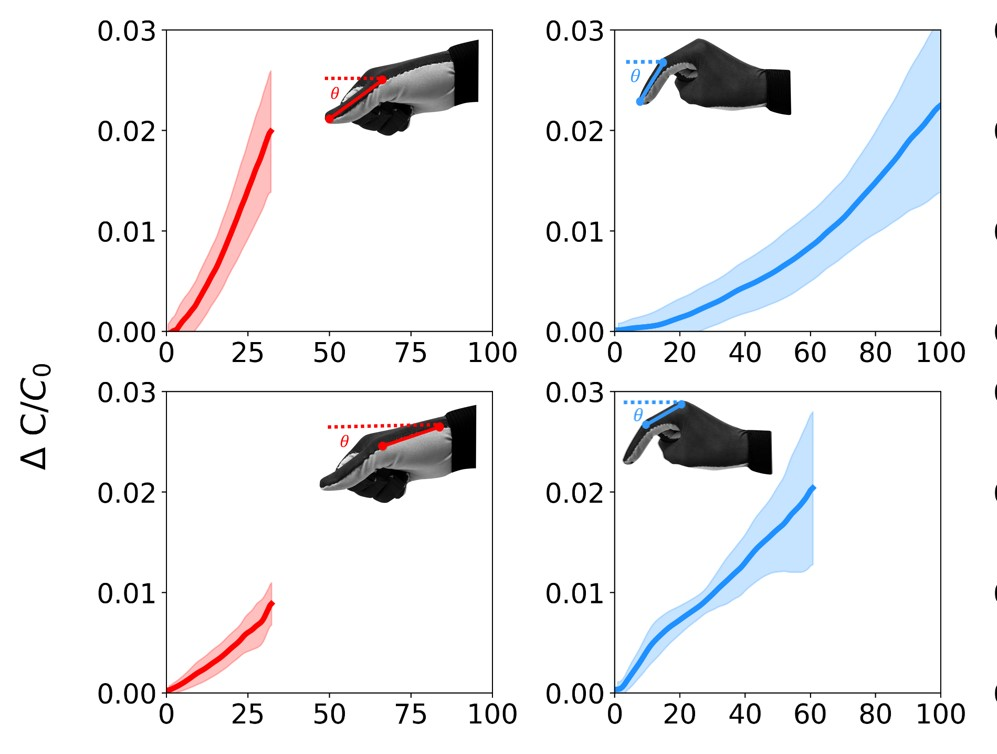
Biomechanics can guide the selection of course content through the analysis of students’ movement patterns. For example, when students operate a computer mouse, the coordination of fine hand movements and muscle strength is critical to task performance. Teachers can adjust the difficulty of course content by analyzing the mechanics of students’ hand movements during the learning process, ensuring that students can complete the required tasks without experiencing undue fatigue. The following equation expresses the relationship between hand force and movement:
where \(F\) is the applied force, \(\mu\) is the coefficient of friction, and \(N\) is the positive pressure exerted by the finger. By measuring this mechanical relationship, teachers can assess whether students’ hand strength is appropriate for particular fine motor tasks and use this assessment to optimize the corresponding teaching content.
Biomechanics provides teachers with both a theoretical foundation for optimizing teaching content and guidance for selecting appropriate teaching methods. In online teaching in particular, teachers need to impart knowledge while also attending to students’ physical condition and helping them remain physically comfortable during learning. Biomechanics can guide teachers in addressing posture, movement, and movement efficiency, enabling them to help students reduce unnecessary physical strain throughout the learning process and during the performance of individual learning tasks.
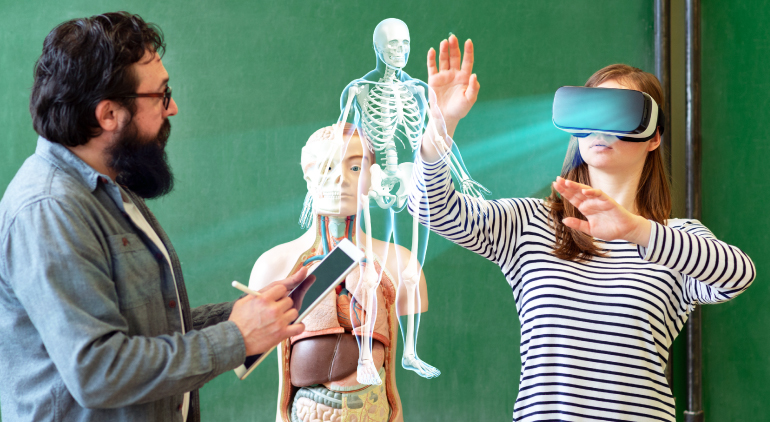
The development of modern information technology enables the creation of virtual environments and motion simulations, allowing teachers to use virtual simulation technology to help students better understand learning content. For example, when teaching fine motor skills, teachers can use virtual reality (VR) technology to simulate hand movements and analyze the trajectories and forces of students’ movements according to a biomechanical model. Through this approach, teachers can adjust teaching content and instructional methods in real time, ensuring that students learn within an environment in which movement conditions are optimized for the learning activities.
As shown in Figure 6, teachers can apply biomechanical principles to design motion simulation scenarios in virtual reality (VR)-assisted teaching, helping students learn in a more natural manner. For example, during the teaching process, teachers can use VR technology to simulate students’ movement trajectories and enable students to adjust their movements in response to real-time feedback, thereby reducing unnecessary physical strain. By using these tools in their teaching practice, teachers can enhance students’ learning efficiency while also helping them practice the required movements within a safe and comfortable learning environment.
Biomechanics not only helps improve students’ learning efficiency but also helps prevent health problems associated with long hours of study. Factors such as prolonged sitting, incorrect hand positions, and muscle fatigue often have adverse effects on students’ physical health. The study of biomechanics can help teachers develop a better understanding of these issues and support students’ health by adapting their teaching methods and the design of the learning environment.
Figure 7 illustrates how students’ physical health affects their learning effectiveness. By observing indicators of students’ physical condition, such as their fatigue levels and whether they maintain correct sitting posture, teachers can adjust their teaching methods accordingly. For example, if students show signs of fatigue or physical discomfort, teachers can modify the pace of the lesson to prevent students from becoming physically unwell because of prolonged and intensive learning. Through an understanding of biomechanics, teachers can create a healthier and more productive learning environment that better supports their students throughout the learning process.
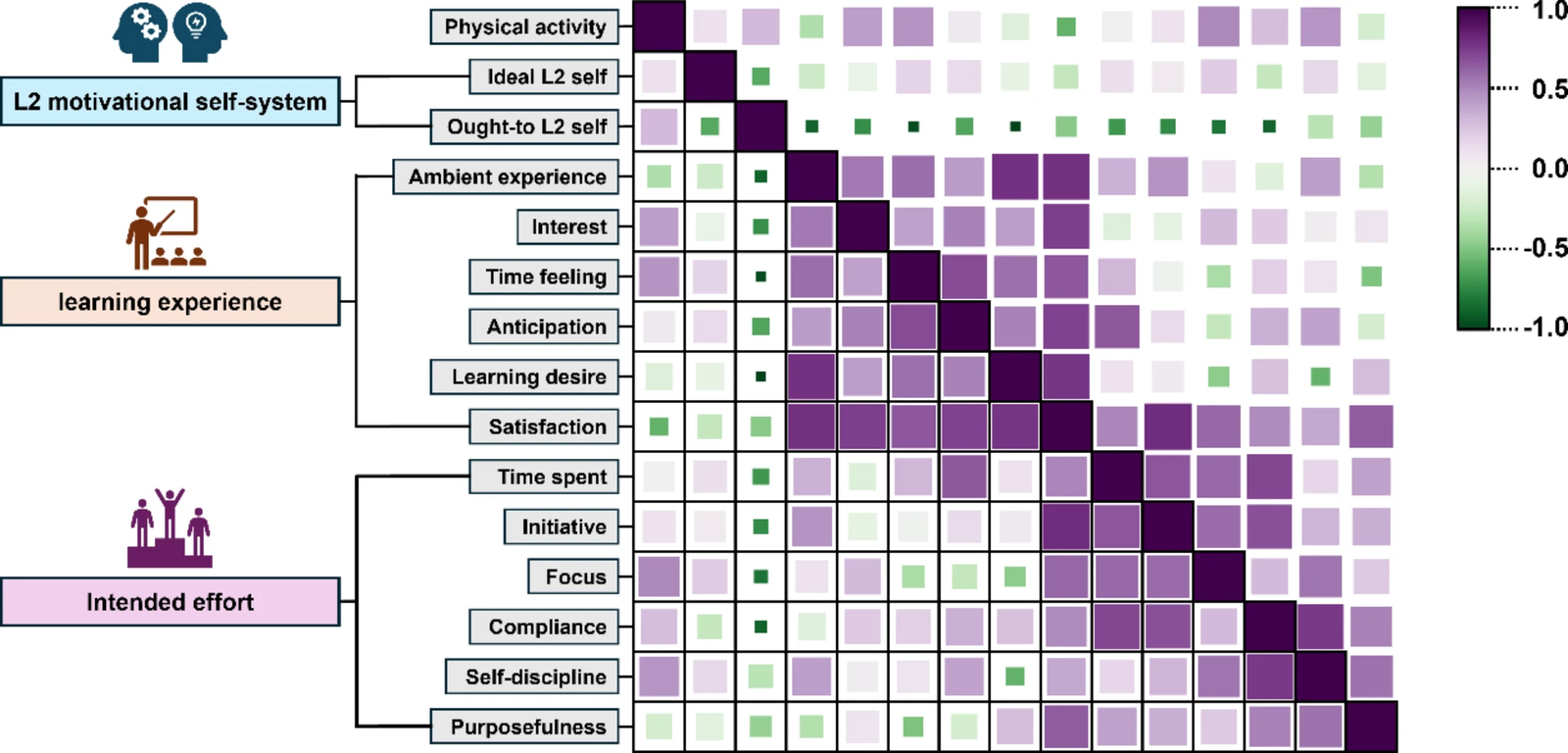
Biomechanical studies have found that students’ physical health directly affects their learning efficiency. The relationship between physical health and learning efficiency during students’ learning activities can be described using the following formula, which relates learning efficiency to cognitive ability and physical fatigue:
where \(\eta\) is learning efficiency, \(C\) is students’ cognitive ability, \(F\) is their level of physical fatigue, and \(\alpha\) is a constant that influences the relationship between physical fatigue and learning efficiency. As the level of physical fatigue increases, learning efficiency exhibits a decreasing trend. Therefore, the study of biomechanics helps improve students’ learning efficiency and supports better learning outcomes by identifying and reducing the physical fatigue experienced during the learning process.
The approach to cultivating ethical excellence among teachers should be improved, and teachers should integrate the objectives of moral education into every aspect of their daily classroom instruction and broader educational practice within schools.
First, the curriculum should emphasize moral development. To develop exceptional educators, teachers must consistently implement the curriculum for teacher ethics education, improve its effectiveness, and incorporate the ethical dimensions of teaching into other courses. The importance of classroom instruction as a primary means of personal development should also be emphasized throughout this process. By strengthening the educational role of the curriculum, institutions can encourage future teachers to participate more actively in public affairs. These future educators should also be encouraged to assume social responsibility as an integral part of the process through which the curriculum develops their professional ethics and moral character.
Second, moral education should be supported through culture. Teachers who contribute to education in their home country are both recipients and transmitters of culture. To educate students through culture and nurture their development through literature, teachers must help students deepen their cultural engagement, enrich their cultural understanding, and develop an interest in learning more about culture. Future exceptional educators should be expected to actively assume the cultural responsibilities associated with intellectual life, contribute to the transmission of traditional and local culture, and make an appropriate contribution to the development of society. These responsibilities form part of their role as educators and participants in cultural life.
Third, moral education should be put into practice. The development of virtue requires sustained time and effort. Teachers can develop the qualities appropriate to education only through continuous transformation, improvement, and refinement of their professional practice. By participating in thematic practical activities, work-related activities, study tours, and volunteer services, teachers should strengthen their practical understanding of moral virtue and develop their sense of social responsibility, capacity for innovation, and practical abilities. Teachers should also organize opportunities for students to participate in internships or teaching activities in schools. These opportunities should ensure that every student can visit the relevant communities, understand their educational settings, and become familiar with the environments in which teaching and learning take place.
Fourth, the management of moral education should be strengthened. Colleges and universities should support the development of a system for cultivating teacher excellence that incorporates all aspects of professional ethics education. This work includes improving management systems, defining job responsibilities, strengthening the development of teacher ethics, refining codes of conduct, and addressing other aspects of cultivating ethical excellence among teachers in rural areas. These elements should be incorporated into the broader system through which institutions prepare exceptional teachers. Improving teachers’ awareness of self-management and their ability to manage their own professional conduct is also essential to the successful development of moral excellence among educators.
Fifth, moral education should involve coordinated participation. Colleges and universities do not develop exceptional teachers independently; this development results from cooperation among multiple parties. Universities frequently need to collaborate with relevant government agencies, grassroots self-governance organizations, and primary and secondary schools to cultivate the moral character of exceptional educators. At the same time, the various departments within each university must work toward shared objectives and support the same educational goals. To facilitate the timely improvement of teachers’ moral character, professional competence, and adaptability to their work, teachers should pay particular attention to the integration of industry and education. They should also provide professional preservice training for future exceptional teachers that reflects the diverse needs of the schools in which these teachers will work.
After developing the necessary platform for sharing educational information, we conducted a questionnaire survey to further investigate the platform’s impact and effectiveness in supporting the education and training of teachers in colleges and universities. The questionnaire for instructors contains a total of 34 questions. Table 1 presents the detailed indicator framework used to organize the questionnaire and its corresponding survey items.
Table 2 presents the relationship between sitting posture and physical health, including the sitting angles, spinal pressure values, and corresponding student health ratings reported in the study.
Maintaining poor sitting posture for prolonged periods can increase pressure on students’ spines, potentially leading to muscle fatigue, joint pain, and other problems that may also affect their concentration. By applying biomechanical principles, teachers can design appropriate learning environments that enable students to maintain correct sitting postures throughout their learning activities. The data in Table 2 indicate an inverse relationship between sitting angle and spinal pressure. Maintaining an appropriate sitting angle can significantly reduce students’ physical burden and improve their learning efficiency. Therefore, teachers should regularly remind students to adjust their sitting postures and encourage them to engage in appropriate physical activities and stretching exercises to reduce physical strain throughout the learning process.
| Primary Indicators | Secondary Indicators | Question Numbers |
|---|---|---|
| Perceptions of teaching and objective setting | Understanding course objectives | 1,2 |
| Setting teaching objectives | 3,4,5,6 | |
| Subject content and comprehension | Selecting content for teaching materials | 7,8 |
| Understanding the content | 9,10 | |
| Handling and processing of knowledge | Teaching techniques and strategies | 11,12,13,14,15,16,17,18 |
| Critical understanding | 19,20,21 | |
| Integration and transformation of knowledge | 22,23,24 | |
| Cooperation and interpersonal communication | Communication and collaboration among students | 25,26,27,28 |
| Teacher–student communication and collaboration | 29,30 | |
| Evaluation and reflection on teaching | Student evaluation and reflection | 31,32 |
| Teacher reflection and evaluation | 33,34 | |
| Handling and processing of knowledge | Learning strategies | 15,16,17,18,19,20 |
| Critical understanding | 21,22,23 | |
| Integration and transformation of knowledge | 24,25,26 | |
| Cooperation and interpersonal communication | Communication and collaboration among students | 27,28,29,30,31 |
| Student–teacher collaboration and communication | 32,33 | |
| Evaluation and reflection | Self-assessment and reflection | 34,35,36,37,38 |
| Evaluation by others | 39,40 |
| Sitting Angle (\(^\circ\)) | Spinal Pressure (N) | Student Health Rating (0–10) |
|---|---|---|
| 90 | 150 | 8 |
| 100 | 130 | 9 |
| 110 | 120 | 9.5 |
| 120 | 110 | 10 |
Table 3 illustrates the relationship between students’ physical fatigue and learning efficiency. As their physical fatigue increases, learning efficiency decreases significantly. Biomechanical research indicates that students’ physical health is closely related to their cognitive abilities and learning efficiency. Teachers should therefore monitor students’ physical fatigue and incorporate appropriate measures into their teaching, including regular breaks and stretching activities, to help students alleviate fatigue and maintain high levels of learning efficiency. In online teaching, teachers can help students maintain good physical condition while learning by reminding them to take breaks at regular intervals and observing their physical responses through interactive feedback during the learning process.
| Fatigue Level (%) | Learning Efficiency Score (0–10) |
|---|---|
| 0 | 9.5 |
| 20 | 8.8 |
| 40 | 7.5 |
| 60 | 6 |
| 80 | 4.2 |
Table 4 summarizes teachers’ responses regarding curriculum standards and online classes, reporting the frequency, mean value, and standard deviation for each questionnaire item.
| Item | Frequency | Mean Value | Standard Deviation |
|---|---|---|---|
| Studying curriculum standards | 799 | 4.41 | 0.74 |
| Online classes | 799 | 3.26 | 1.074 |
According to Table 4, the mean score for familiarity with the teaching objectives specified in the curriculum standards before lesson preparation was 4.41, which was significantly higher than the average. This finding indicates that teachers possessed some prior knowledge of the course and the curriculum standards that the lesson was intended to address before beginning their lesson preparation. Figure 8 illustrates the distribution of these responses, showing that 44.4% of teachers selected agree, while 49.7% selected strongly agree.
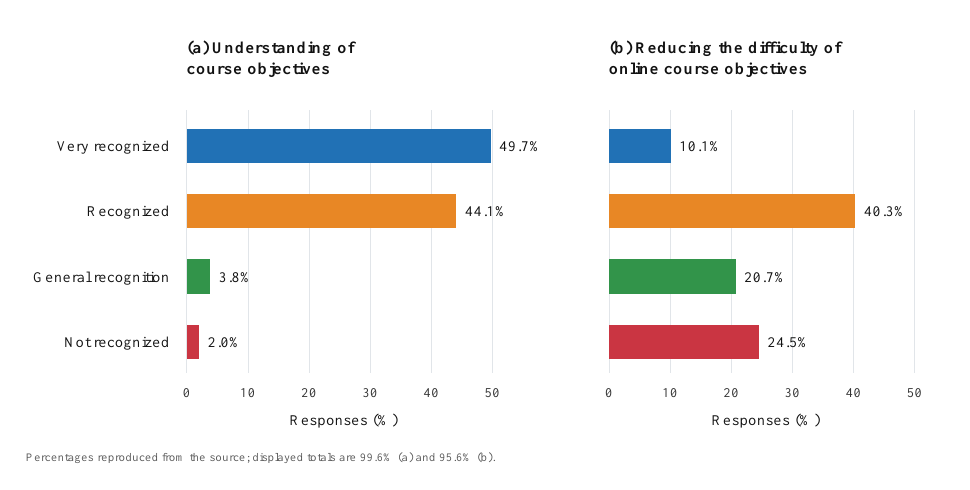
Question 2 assesses teachers’ views on using contemporary information technology for instruction compared with setting course objectives in conventional classroom environments. This question is a reverse-worded item. In the discussion of the online instruction item in Table 4, the reported mean value of 3.27 is above the comparison value, indicating that most teachers believe course objectives should be made less challenging during online instruction. The reported response distribution similarly shows that 10.1% of instructors selected strongly agree and 40.3% selected agree regarding the reduction in difficulty. Among all respondents, 20.7% selected the middle response category, while 24.5% and 4.4% selected disagree and strongly disagree, respectively.
Table 5 presents the survey results concerning the ways in which teachers establish teaching goals and consider students’ learning needs when defining instructional objectives.
As shown in Table 5, teachers consider organizing activities according to their complexity when developing teaching objectives, ensuring that the activities accommodate students’ ability to acquire knowledge. Teachers must also consider environmental factors when designing learning objectives because contemporary information technology platforms provide learning environments that differ considerably from traditional classrooms. Different teaching environments can enable students to attain different cognitive levels from those achieved in conventional classroom settings, while also allowing clearer differentiation according to the levels of objectives that students can accomplish. More than 90% of instructors agreed that the learning environment influences students’ cognitive levels, with a mean response score of 4.16. Furthermore, 70% of teachers believed that students’ attainable objective levels were more clearly differentiated. The mean score for this item was 3.85, which remained higher than the average response level.
| Item | Frequency | Mean Value | Standard Deviation |
|---|---|---|---|
| Organizing educational activities according to a sequence of objectives | 799 | 7.19 | 0.757 |
| Setting learning goals relevant to students’ lives | 799 | 4.15 | 0.746 |
| Different settings influence different cognitive levels | 799 | 4.16 | 0.702 |
| More clearly distinguishing the levels of objectives that students can achieve | 799 | 3.85 | 0.835 |
Table 6 presents the results of the survey concerning the teaching materials selected by village teachers, including their responses regarding content selection and the teaching of basic knowledge.
| Item | Frequency | Mean Value | Standard Deviation |
|---|---|---|---|
| Selection of teaching content | 799 | 2.92 | 1.142 |
| Teaching of basic knowledge | 799 | 2.74 | 1.308 |
While curricula and teaching materials address what teachers teach and what students learn, teaching objectives address why teachers teach and why students learn. Teachers in remote areas encounter difficulties in selecting and understanding instructional materials within the new learning environment. The mean score for selecting material contained in textbooks and examinations was 2.92, which was below the comparison value of 3. This finding suggests that teachers are open to incorporating new information into their lessons and are not exclusively focused on the examination syllabus. Across the overall survey, 6.6% of teachers selected strongly disagree and 39.9% selected disagree regarding teaching only the available material. By comparison, just 10.5% selected agree. Figure 9 illustrates the distribution of responses concerning the selection of teaching content.
For the basic knowledge instruction item presented in Table 6, the accompanying discussion reports a mean response score of 2.75, which is below the comparison value of 3. This result indicates that teachers do not regard the teaching of basic knowledge in online courses as particularly challenging. The reported response distribution shows that 6.6% of teachers considered teaching fundamental concepts in online courses very difficult, while 19.8% selected agree. However, teachers who perceived little difficulty accounted for 47.6% of all respondents, a substantially larger proportion than those who considered this form of instruction difficult.
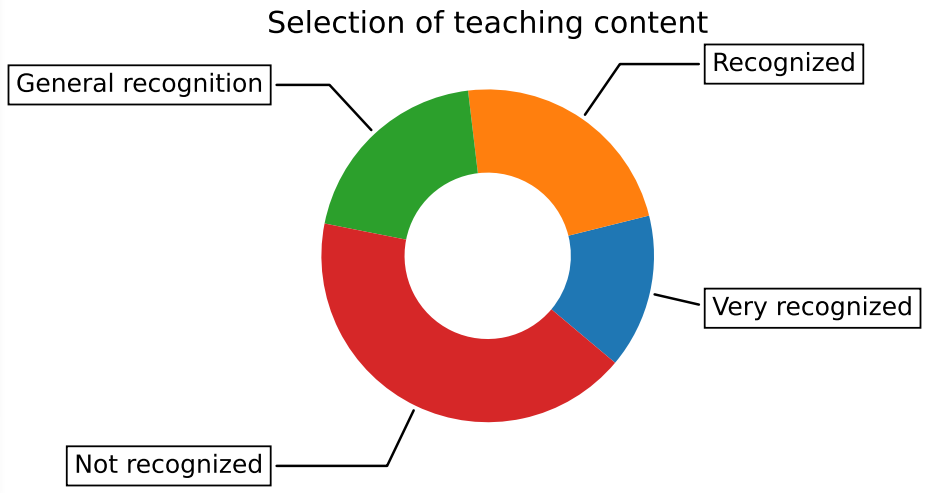
Table 7 presents the survey results concerning teachers’ understanding of the subject matter contained in instructional materials, particularly their integration of different materials and their emphasis on fundamental ideas and principles.
| Item | Frequency | Mean Value | Standard Deviation |
|---|---|---|---|
| Integrating different materials | 799 | 3.91 | 0.785 |
| Emphasizing fundamental ideas and principles | 799 | 2.77 | 1.101 |
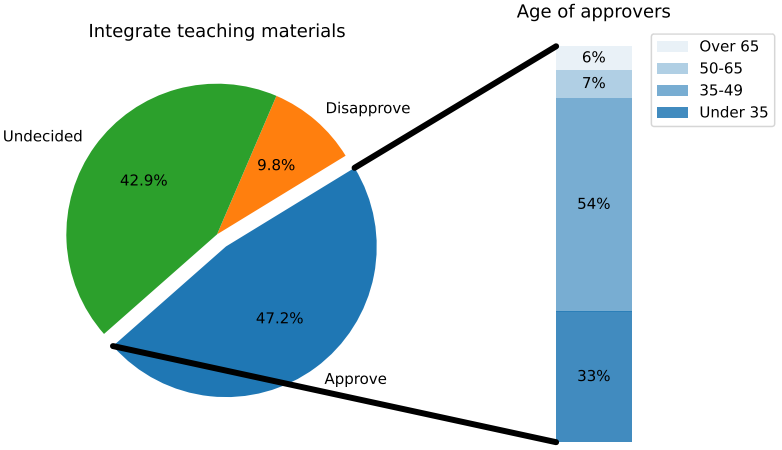
When considering the benefits that modern information technology can bring to teaching materials, teachers first recognize that the Internet provides a wealth of resources that they can select and incorporate into new instructional materials. These materials can be updated immediately to maintain their timeliness. Table 7 indicates that teachers tend to use web-based resources, with a mean response score of 3.91 for the integration of different materials. Figure 10 shows that 54.1% of teachers selected agree, while 20.8% selected strongly agree. Only 4.6% of respondents selected strongly disagree. In addition, the item concerning the teaching of fundamental concepts is reverse-worded. The discussion reports a mean score of 2.78 for emphasizing only fundamental ideas and principles without incorporating the logic of the discipline. This result indicates that teachers continue to extend learning content by incorporating disciplinary logic into their lessons.
Table 8 presents the results of the survey on teachers’ instructional strategies and methods. The items cover memorization, note-taking, software use, virtual scenarios, whiteboards, and the integration of materials and tools.
| Item | Frequency | Mean Value | Standard Deviation |
|---|---|---|---|
| Memorizing knowledge | 799 | 3.66 | 0.912 |
| Taking notes | 799 | 3.67 | 0.890 |
| Using memory aid software | 799 | 3.52 | 0.941 |
| Creating virtual scenarios | 799 | 3.87 | 0.766 |
| Including only the most important information | 799 | 2.951 | 1.0537 |
| Using a whiteboard | 799 | 3.96 | 0.787 |
| Combining materials | 799 | 4.22 | 0.665 |
| Combining multiple tools to construct a body of knowledge | 799 | 3.98 | 0.756 |
Table 9 presents the survey results concerning teachers’ critical understanding of instruction, including the internal logic of knowledge, opportunities for questioning, and attitudes toward open-ended assessment questions.
| Item | Frequency | Mean Value | Standard Deviation |
|---|---|---|---|
| Explaining knowledge according to its internal logical sequence | 799 | 4.08 | 0.671 |
| Allowing opportunities for questioning | 799 | 3.97 | 0.709 |
| Open-ended test questions are troublesome | 799 | 2.68 | 1.021 |
According to the taxonomy of competencies, critical understanding is primarily demonstrated through the use of higher-order thinking skills, including evaluation, analysis, and creativity. The questions in this section were designed around two related premises: knowledge has an internal logical structure, and instruction that respects this structure is necessary to help students memorize, understand, and apply knowledge as a foundation for developing thinking skills. More than 88% of educators agreed with this statement. To help students develop higher-order thinking skills, teachers must allow them to question the material they receive and explain the purpose of encouraging such questioning. Through this process, students develop their evaluation and analytical abilities because they must assess the reliability, sources, and completeness of information, together with their own understanding of it.
Similarly, open-ended questions allow students to combine information from different fields, develop their creative abilities, and express their viewpoints in a logical and organized manner. The discussion reports a mean score of 3.98 for providing students with opportunities to challenge knowledge, indicating that instructors’ willingness to offer opportunities for higher-order thinking is higher than the national average. The reverse-worded Question 21 received a mean score of 2.68, suggesting that teachers do not generally object to the challenges associated with open-ended questions and welcome students’ insightful thinking. Nevertheless, 15.5% selected agree, 5.3% selected strongly agree, and 28.7% selected the middle response category. Together, these categories accounted for nearly half of the respondents (49.5%), reflecting continuing reservations about open-ended questions. Figure 11 presents the corresponding distribution of teachers’ responses.
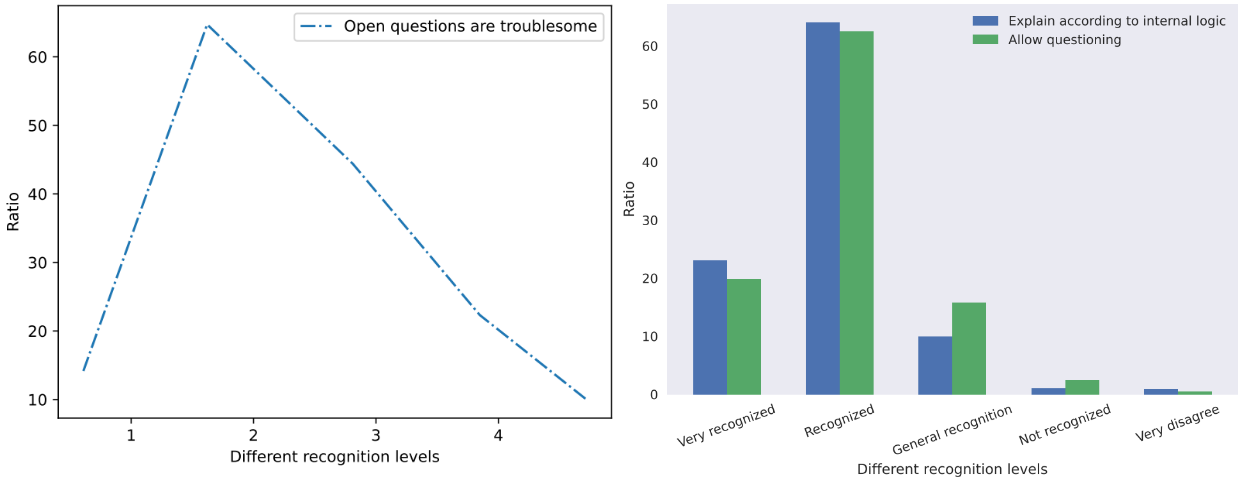
Table 10 presents the results of the survey on teachers’ strategies for integrating and transforming knowledge. These strategies include connecting knowledge across disciplines, using different methods to solve real-world problems, and introducing knowledge conflicts during classroom instruction.
| Item | Frequency | Mean Value | Standard Deviation |
|---|---|---|---|
| Integrating knowledge across disciplines | 799 | 4.01 | 0.702 |
| Using various methods to solve real-world problems | 799 | 4.15 | 0.66 |
| Introducing the concept of knowledge conflict in the classroom | 799 | 4.04 | 0.682 |
Table 11 summarizes teachers’ responses concerning student self-reflection and the sharing of learning strategies, reporting the frequency, mean value, and standard deviation for both aspects of instructional practice.
Teachers must help students develop the ability to reflect independently as a means of monitoring their learning processes, learning strategies, and learning outcomes. They should also provide opportunities for students to share their reflections with others. Through this exchange, students can identify and address their own weaknesses while learning from the strengths and experiences of their peers.
| Item | Frequency | Mean Value | Standard Deviation |
|---|---|---|---|
| Student self-reflection | 799 | 4.12 | 0.682 |
| Sharing learning strategies | 799 | 4.04 | 0.681 |
The application of biomechanics in education provides teachers with new perspectives and practical guidance, particularly in online teaching and long-term learning contexts. Through the detailed examination of physiological factors, including students’ physical responses, movement patterns, and muscle fatigue, biomechanics can effectively help teachers optimize instructional design to enhance students’ learning efficiency and physical health. Biomechanics not only improves learning posture and reduces physical strain but also helps teachers optimize curriculum content and difficulty. This can be achieved by considering students’ physiological abilities and avoiding excessive reliance on fine motor control when establishing teaching objectives and designing learning tasks.
In practice, biomechanical principles can provide teachers with specific guidance for improving learning activities through the appropriate design of learning environments and adjustments to students’ postures. For example, suitable seating arrangements, adequate rest periods, and recommendations for movement during breaks can effectively reduce students’ muscle fatigue while improving their concentration and learning efficiency. Furthermore, the integration of biomechanics with modern information technology, particularly virtual reality (VR) and motion simulation technologies, enhances the interactivity of teaching and learning activities and their compatibility with students’ physiological needs. These applications enable students to participate more effectively in learning activities while maintaining a healthy physical condition throughout the learning process.
This research received no funding.
The data supporting the findings of this study are available from the author upon request.
The author declares no conflicts of interest.
ChatGPT (OpenAI) was used to assist with language editing and the preparation of LaTeX code for this manuscript. The author takes responsibility for the accuracy, integrity, and final content of the manuscript.